Priceless New Year
With one month left in the year, a large unspent media budget had moved from agency to agency without a home. I told them we could spend it — but only if we did something that had never been done at this scale before. The result: 665M impressions, 2M hashtag uses, and real-time Times Square billboards updated with cardholder photos as the ball dropped.
The situation
An unspent year-end media budget had been moving between agencies, and production timelines made a traditional execution impossible. The social team inherited it with one month left in the year and no plan. The brief, effectively: spend it fast, at global scale, in a way that works.
The thinking
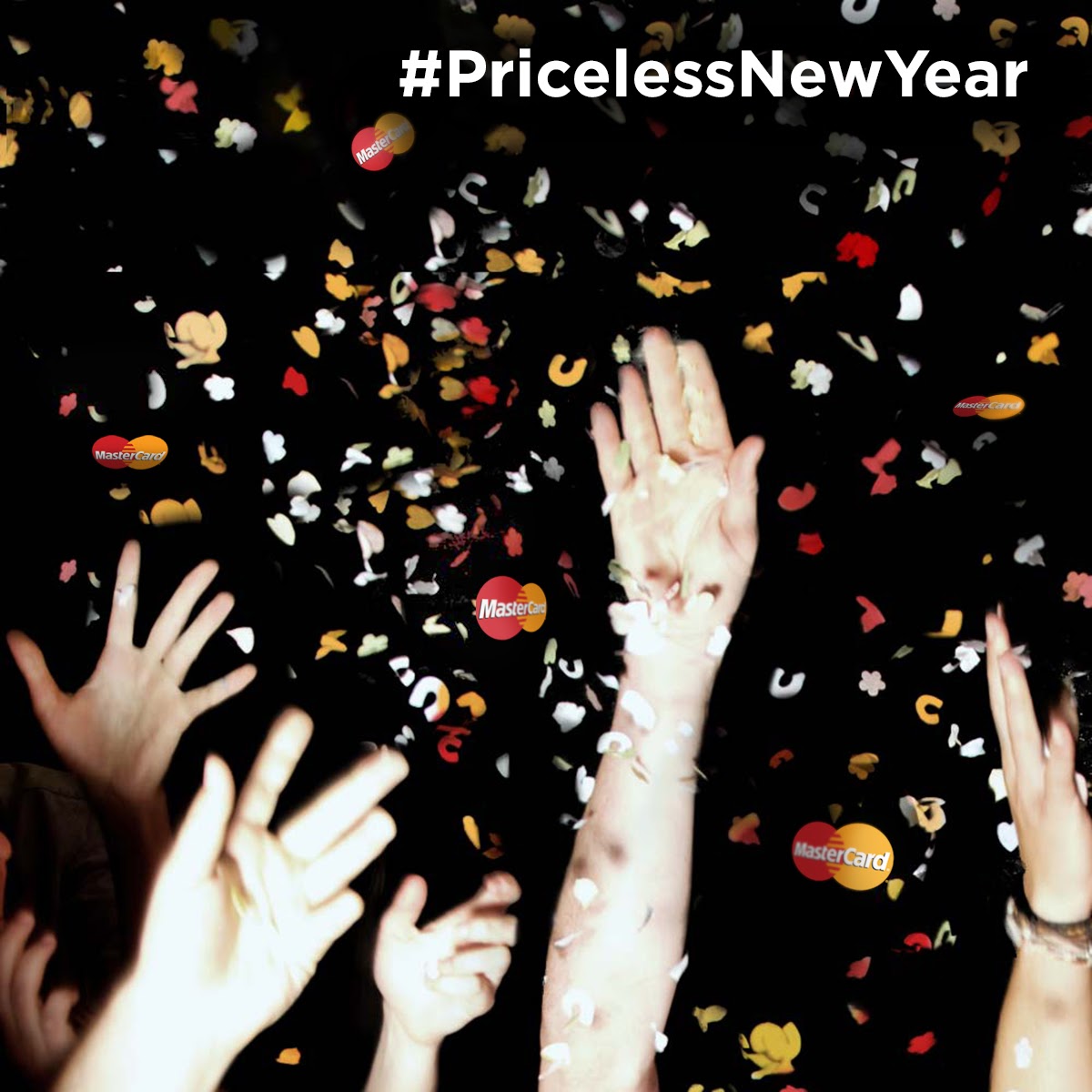
Wish the world a Priceless New Year — and let the world wish it back.
The operational challenge was as significant as the creative one. With a budget that size to deploy rapidly when traditional agencies couldn't execute at scale, I secured first-position Facebook ad placements across all regions simultaneously — the most expensive placement on the platform — paired with the Times Square billboard integration. The speed and scale of execution was itself the proof of concept.
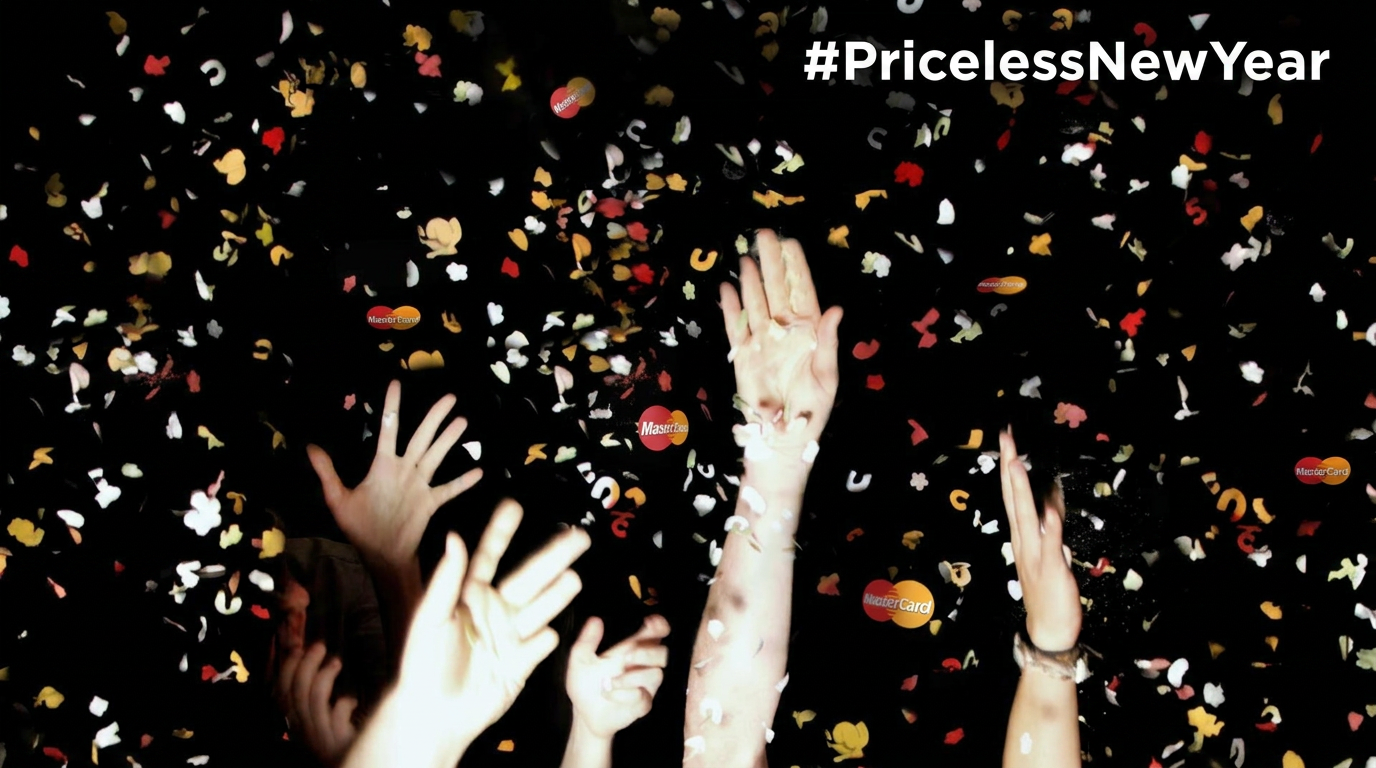
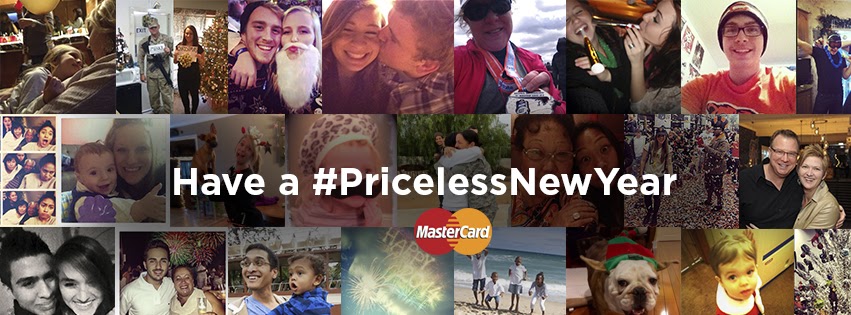
The plan: secure the top-position Facebook ad unit, the most expensive placement on the platform, appearing to all users in every market I selected. Use it to invite people to share a Priceless New Year's message and photo using #PricelessNewYear. In return, their photo could appear on a digital billboard in Times Square as the ball dropped. Simple premise. Operationally, it required building everything from scratch in under a month.
The campaign ran across 13 countries simultaneously, pushing live throughout the day as New Year's arrived in each timezone around the world.
The prevailing view in brand marketing at the time was that UGC — unpolished, personal photography — was unprofessional and inappropriate for paid advertising. I disagreed, but with a budget that size and a timeline this compressed, I needed to know before I committed. So I ran a dark post — an ad that appears to a limited audience but doesn't publish to the brand feed — using a small media buy and my own personal photos. One image was a stylized, branded visual. The other was a photo of me at SantaCon in New York — genuinely happy, dressed in Christmas attire, completely unpolished. The personal photo won by a significant margin.
I have run every significant creative argument this way since. It is the same move I was still making a decade later, putting AI voice synthesis into a paid test matrix in its first year of availability to find out whether it mattered rather than assert that it did. Test the disagreement, then spend against the answer.
That result was the proof I needed. It also confirmed something I'd believed for a while: people in 2013 were already tuning out brand-perfect imagery and responding to faces, human moments, and authentic emotion — even in paid placements. I went with UGC as the creative strategy for the full buy.
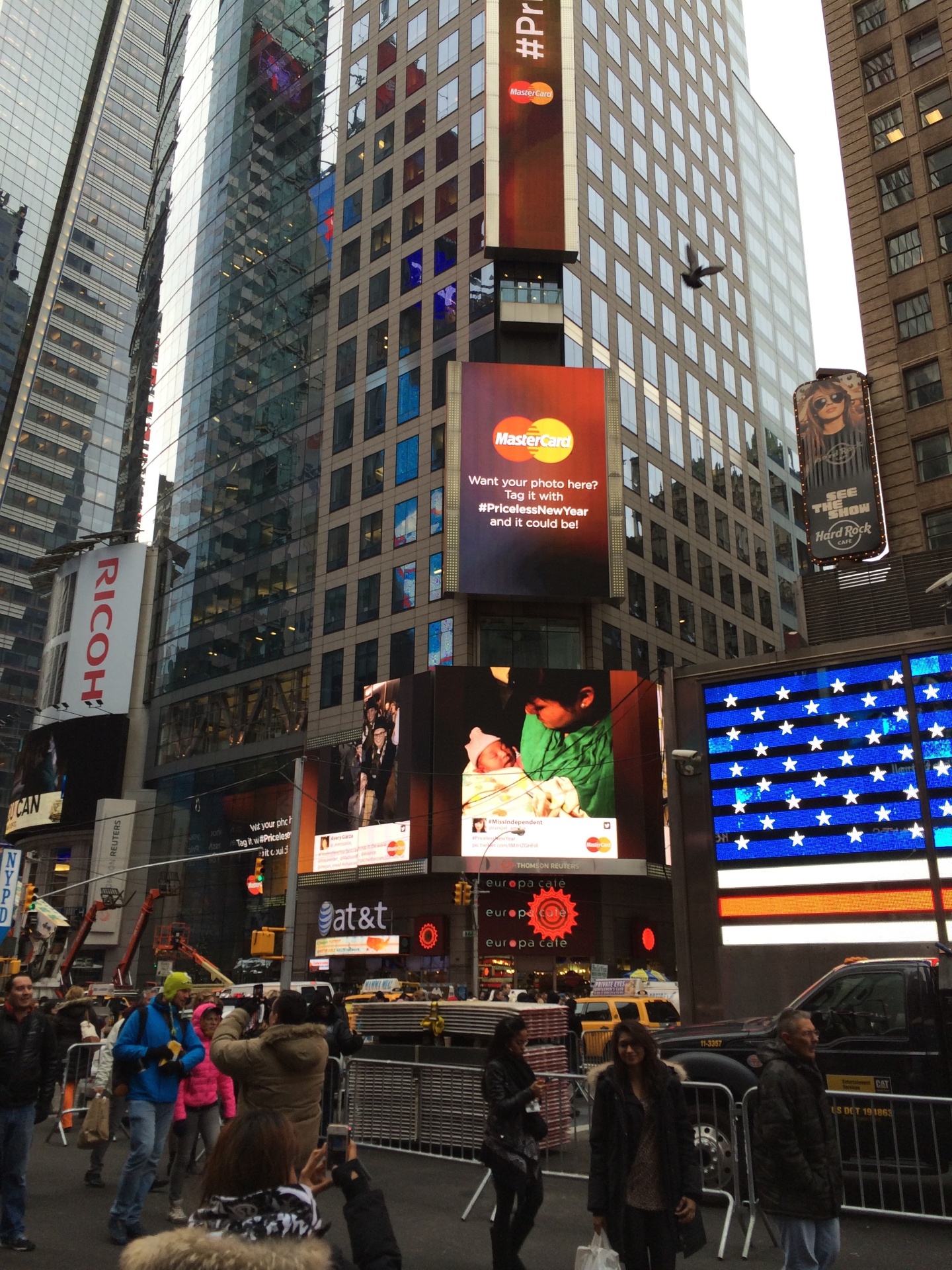
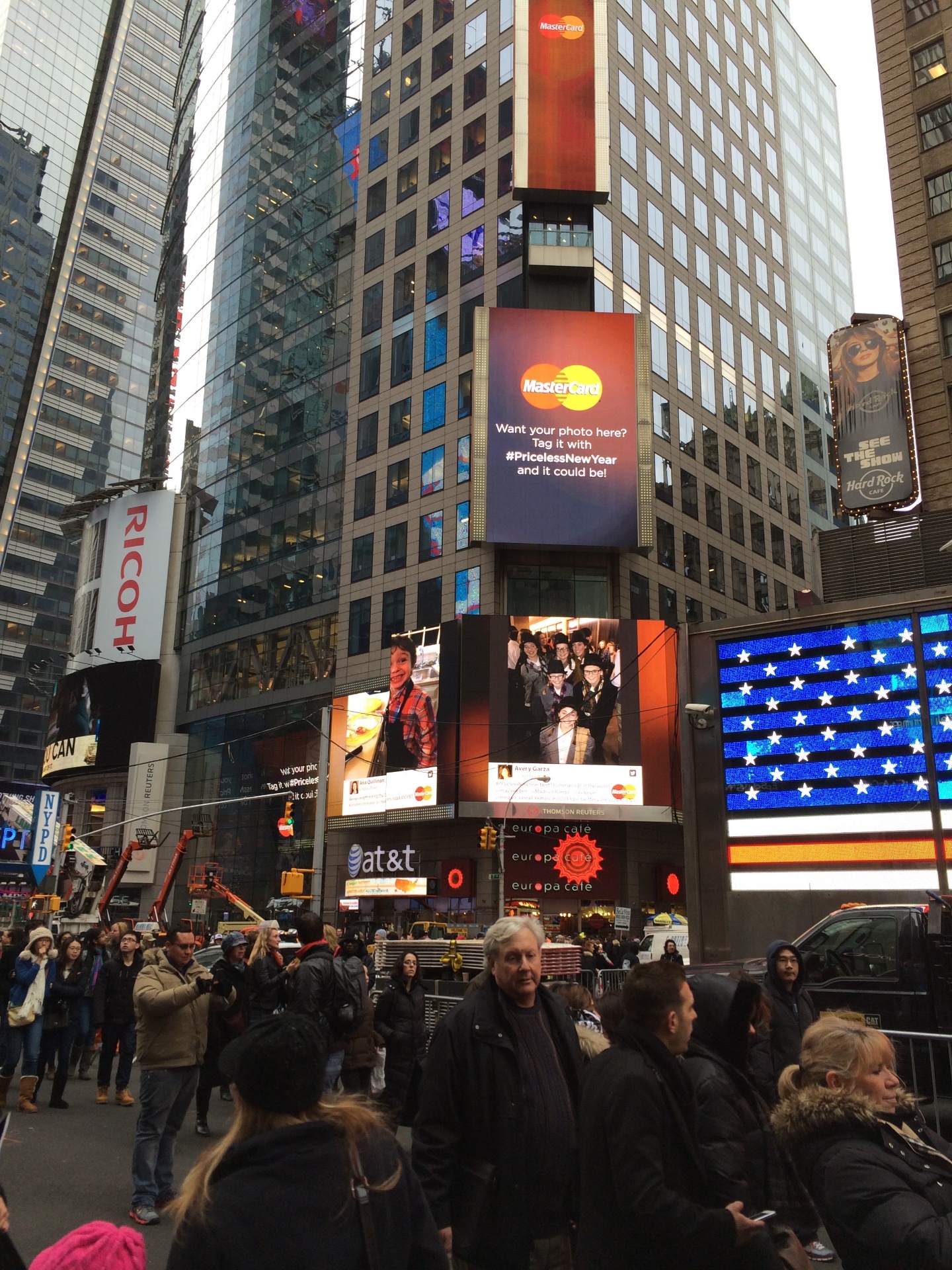
Not all the Times Square billboards could accept live API feeds — some had to be pre-programmed. The dark post served a second purpose: it gave me a small pool of real submissions to pre-load into those billboards before the main campaign went live. For the billboards that could update dynamically, I worked with a content moderation vendor to build a review workflow: submissions came in, were moderated for brand safety, and pushed live to the screens. I coordinated community managers and project managers to take shifts covering every timezone.
What the money bought
The media idea was simple enough to decide in a room: buy the top newsfeed slot in every country where Mastercard had a Priceless City and the placement was available. One position, the most expensive on the platform, everywhere at once.
The rest went somewhere less glamorous and more important — production, a content vetting system, and the people to staff it around the clock for the days either side of midnight.
Thirteen midnights, and the billboards were the hard part
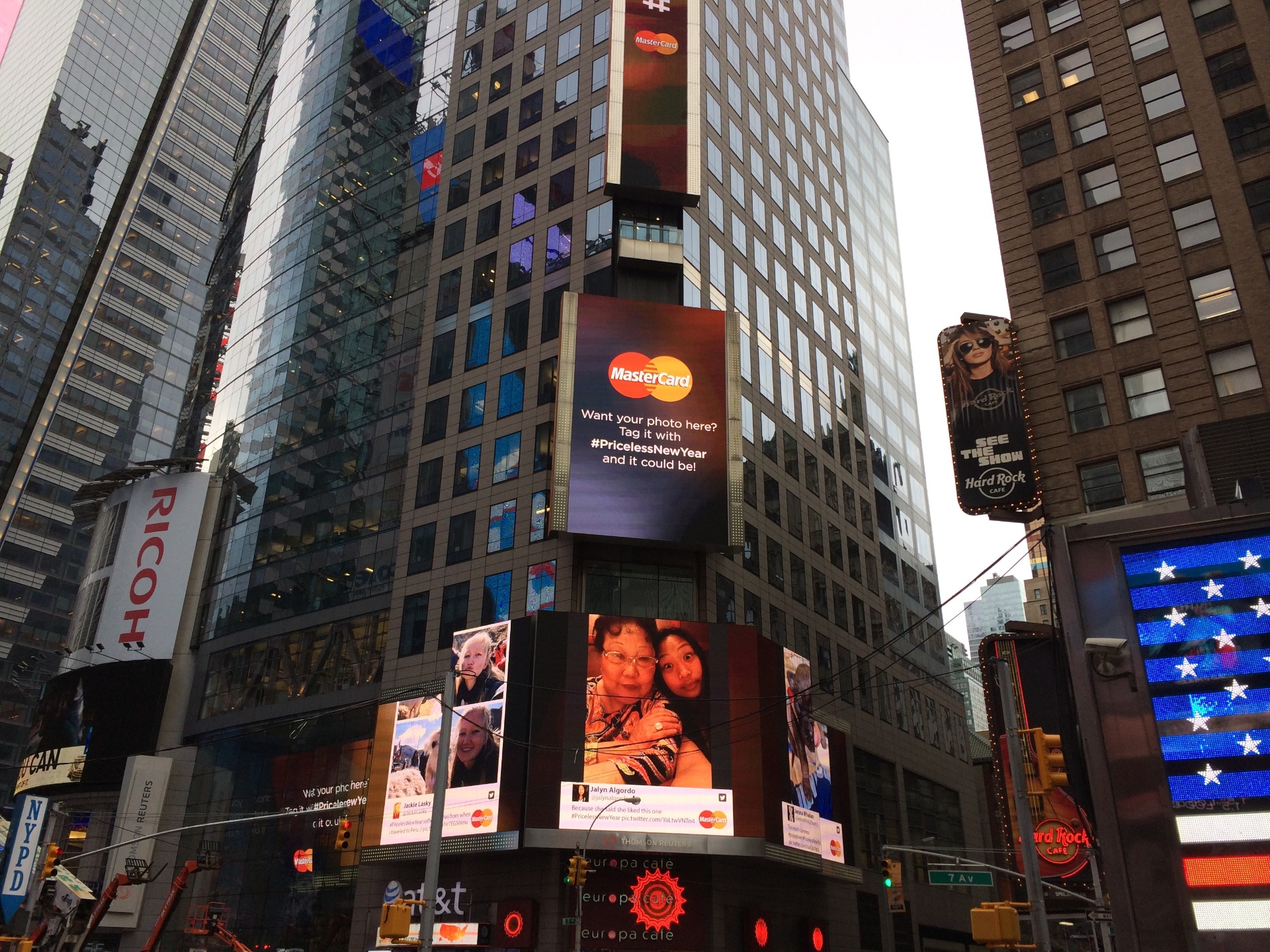
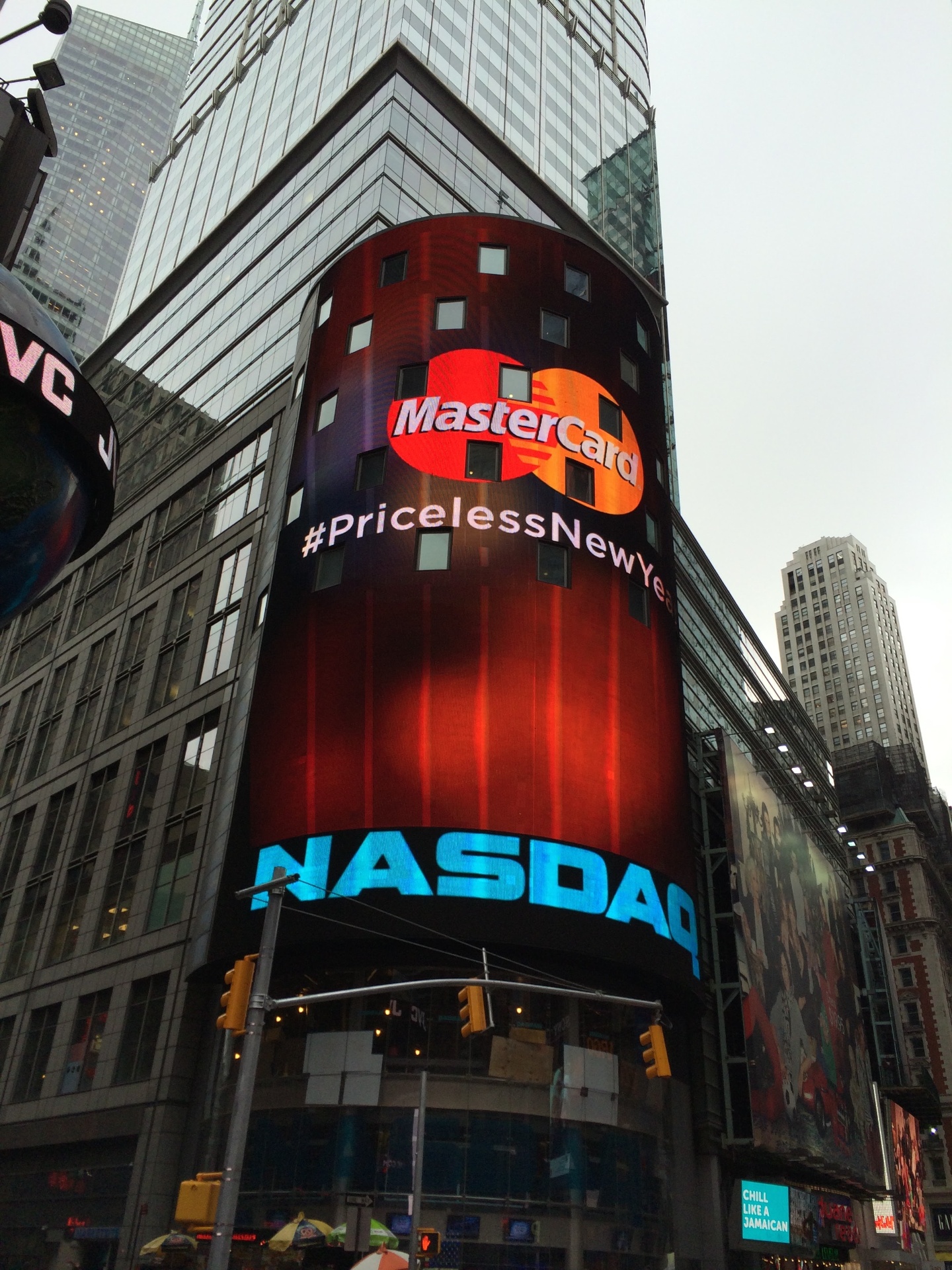
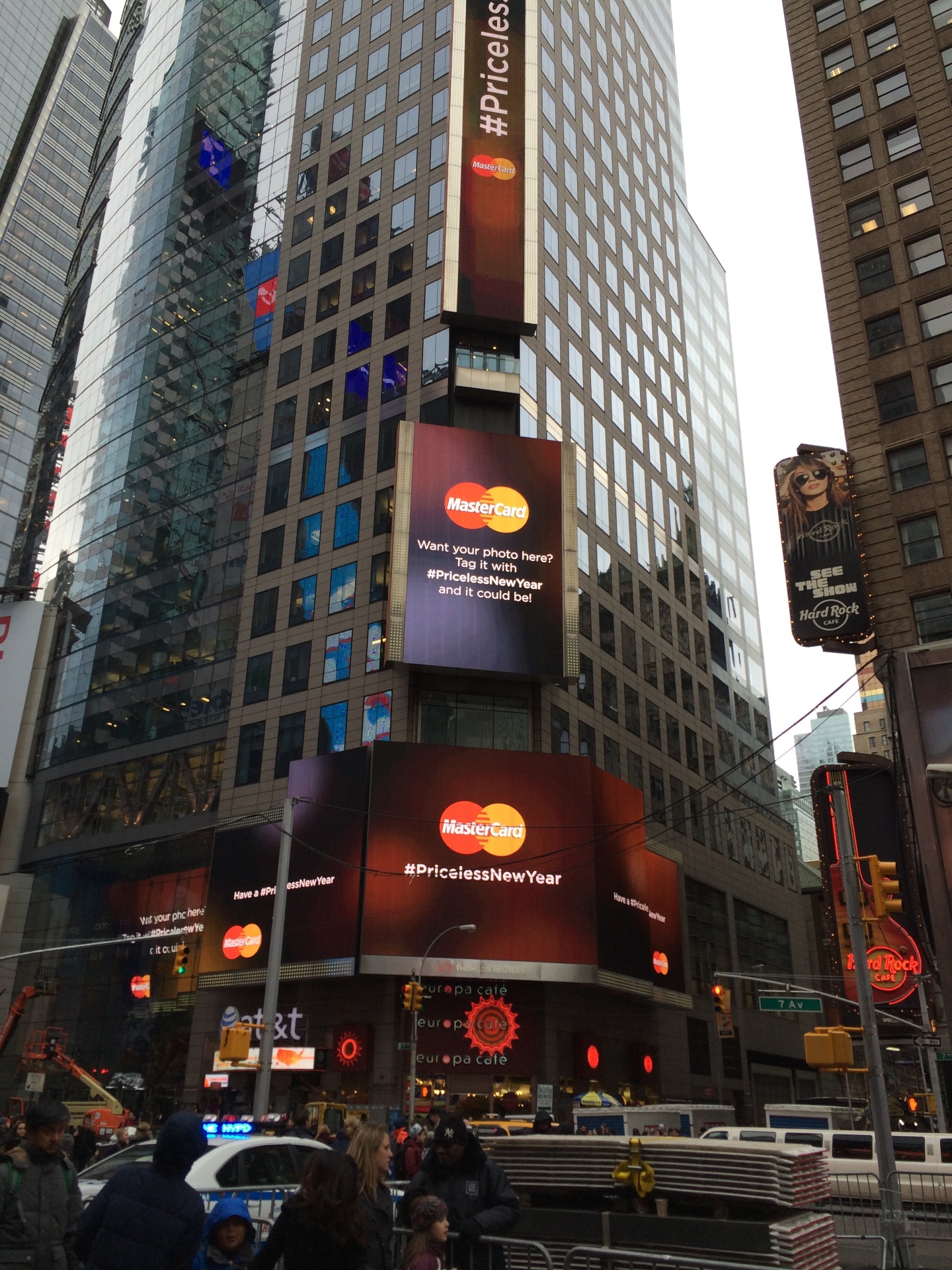
Times Square is not one screen. It's a set of them, in different shapes and aspect ratios, owned by different operators, on different technical standards — and they split into two problems.
The analogue boards couldn't take a live feed. They ran pre-loaded assets on a rotation, which meant something had to already be up there between uploads. So I sourced celebratory New Year's photographs from people at the agency and on the client side, and we loaded those, so the boards were never empty while we waited for the next batch of real submissions.
The digital boards could update dynamically, but only through a pipeline that let us see an image and approve it before it went up. Nobody was putting an unvetted photograph from the internet onto a screen above Times Square on New Year's Eve. We built the review step, staffed it in shifts, and moderated live.
Then the ball dropped and people submitted, and we rotated them in through the night — real faces from thirteen countries, on the most watched square in the world, on the most watched night of the year.
The lesson I took from it: at that speed the creative decision was the easy part. What made it possible was deciding early which boards could take live content and which couldn't, and building a different plan for each. Most campaigns of that size fail on exactly that kind of unglamorous detail.
As New Year's arrived in each country, the hashtags filled with photos. The billboards in Times Square updated with faces from everywhere — real people, real moments, appearing in one of the most watched public spaces in the world on one of the most watched nights of the year.
Results
Deployed at global scale in a month, when traditional agencies couldn't execute. First-position Facebook ad placements across all regions simultaneously. 665M impressions · 2M+ actions. 13 countries. Real-time Times Square billboards. AdWeek named MasterCard one of 12 winning brands of the year.
Awards & Recognition
- Midas Silver — Out-of-Home (2014)
- Midas Silver — Social Media (2014)
- Shorty Awards Finalist — Best Use of Hashtag on Twitter (2013)
- Digiday Finalist — Best Use of Twitter (2014)
01 / 07
Priceless New Year
Real-time campaign strategy · Paid media innovation · UGC creative testing · Technology & operations under pressure