5th Anniversary Event: SkyFest
Sky's Japanese player base is among its most passionate anywhere in the world. SkyFest Tokyo was designed to honor the community that had built something extraordinary there — and to do it in a way that felt as considered and intentional as the game itself.
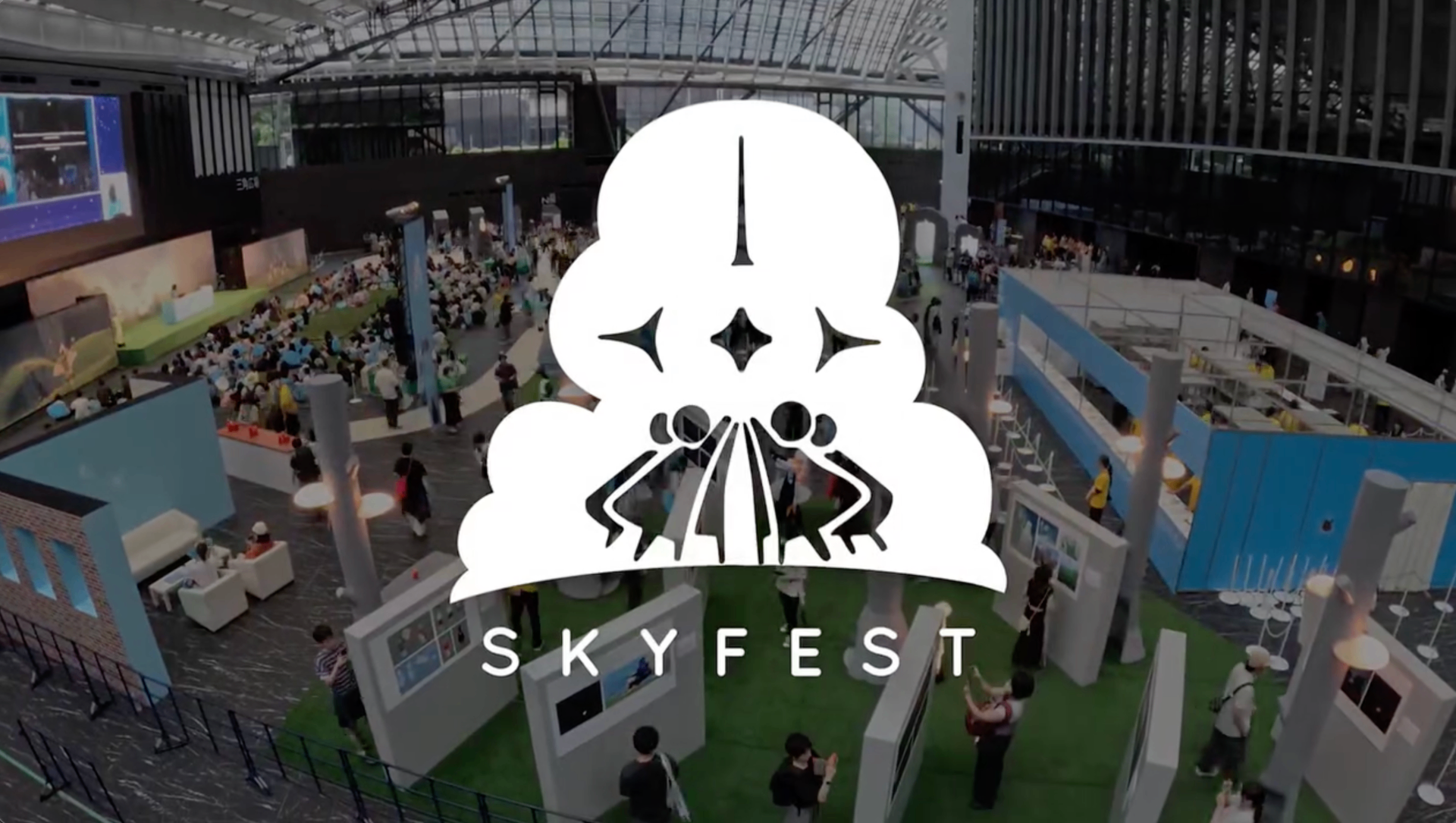
The event ran two days at Sankaku Hiroba in the Shinjuku Sumitomo Building — four sessions total, each ticketed separately. The production scope was full: event branding, keynote presentations, video coverage, a physical recreation of the in-game Aviary Village area, and a curated art exhibit documenting the history of Sky across seven years of development. I oversaw every element of the creative direction and production — working with the art director and curator on the exhibit, producing CEO Jenova Chen's keynote on Sky's future, and managing photography and video coverage that had to work simultaneously as a live experience and as global content.
Designing a global fan moment for an audience that communicates without language — Sky has no text chat — across two communities with fundamentally different relationships to the game required understanding what each community was actually doing in the world, not just watching from outside.
Event film
On-the-ground footage from the two-day SkyFest Tokyo event.
The situation
Sky's Japanese community had built one of the most passionate player ecosystems in the world with almost no direct brand acknowledgment at scale. SkyFest had to honor that community authentically while operating at full production scale, and generate content for a global audience at the same time.
The thinking
I designed every element to function as both a live experience and as global content simultaneously. I produced the art exhibit as a genuine cultural artifact documenting Sky's history — not a marketing installation. Sky players communicate through gesture and proximity rather than text; event design had to honor that language.
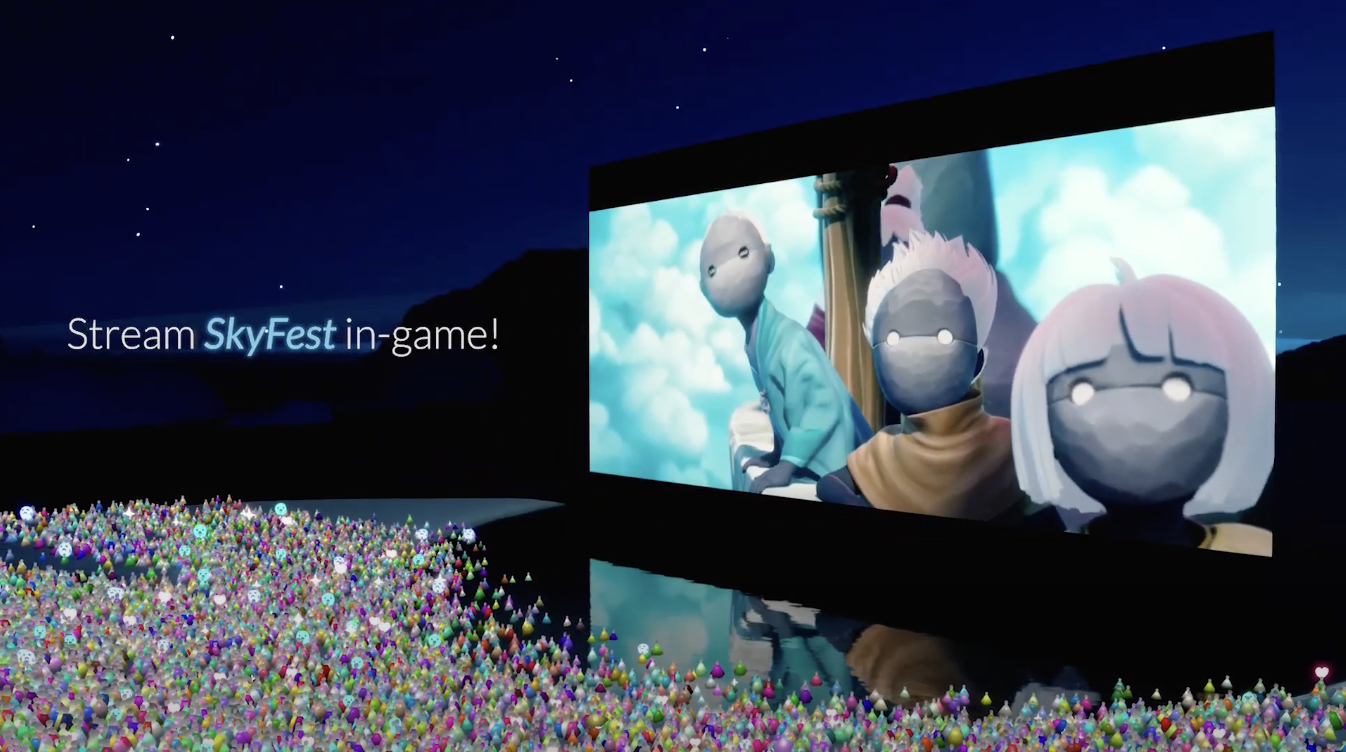
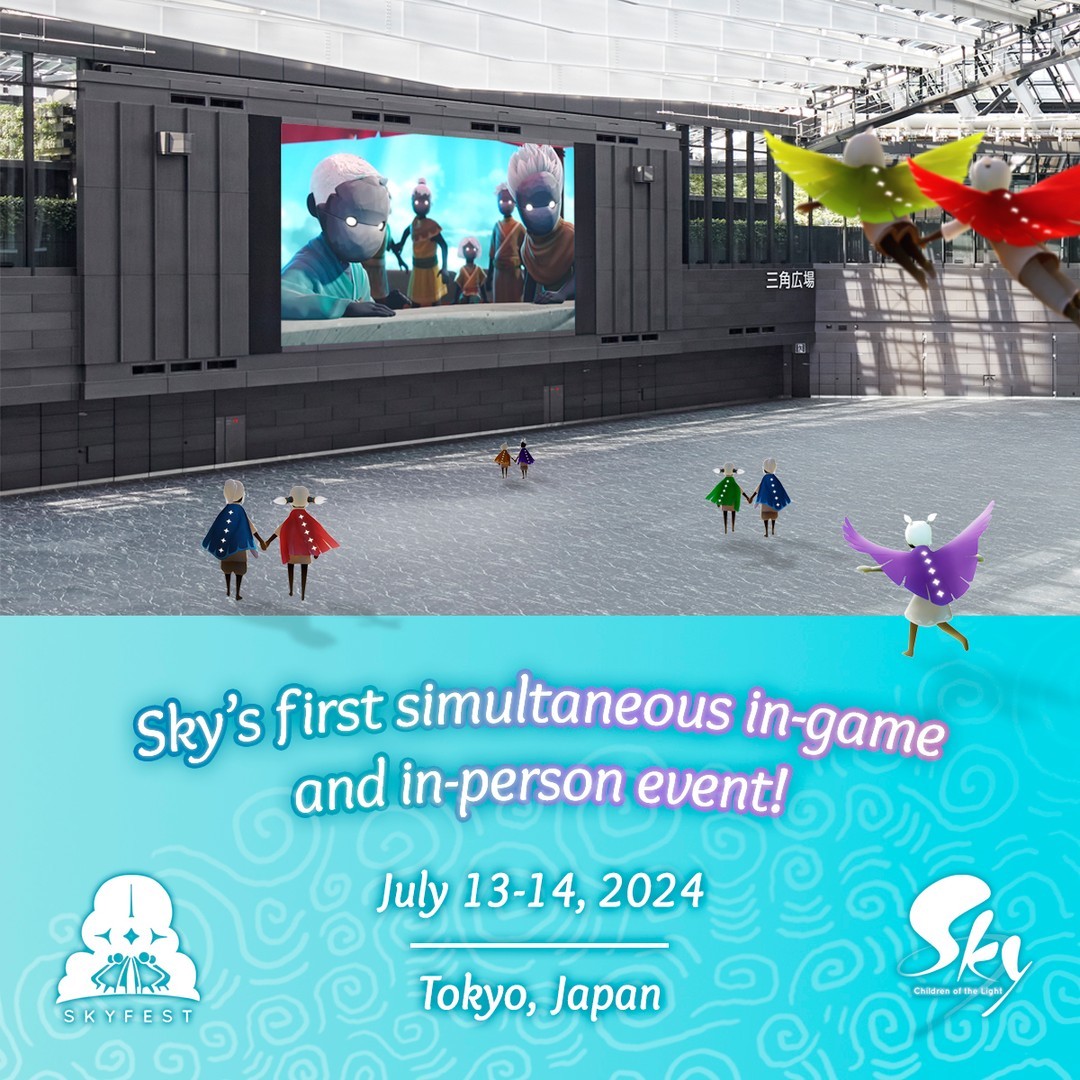
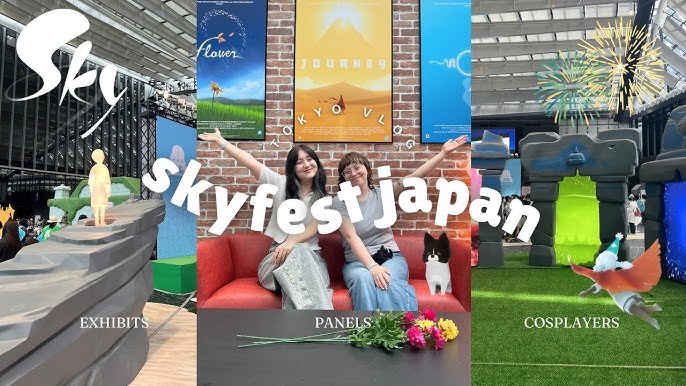
SkyFest was two events at once: a physical festival in Shinjuku and a simultaneous in-game event, with the physical show streamed into the game so players anywhere in the world could attend.
That last part is what defined the work. Streaming into a game means the content cannot be produced live — everything has to be made in advance and loaded into the build. Which turned a two-day festival into a different problem entirely: programming a channel that ran around the clock for more than a week, with no ability to go live and no way to react to anything.
The conventional load was heavy enough on its own — presentations, the keynote, announcements, and activities both on the stage and around the venue, all pre-planned and pre-built.
The rest had to be invented. A lo-fi music channel, built with YouTube's lo-fi community and Glitch, running ambient sound against Sky's environments. A retrospective assembled from six years of trailers. Downloadable wallpapers made from high-end Sky art and animation. And a block given over entirely to the community's own art and creativity.
That last one is the decision I'd defend hardest. For a game whose entire proposition is connection between strangers, handing the screen to the players isn't filler — it's the most on-brand programming available. The constraint made it obvious. Without it we would probably have made more marketing.
Results
300,000 in-person attendees in Shinjuku, Tokyo. 236M earned views across global SkyFest coverage. Average NPS: +89.
Event production · Creative direction · Community strategy · TikTok creator activation